Showing posts with label Engine and Car Maintenance. Show all posts

Friday, 5 April 2013

Understanding Engine Displacement


Engine displacement of a car generally means the volume of an engine’s cylinders, a general indicator of its size and power. The displacement figure represents the total air displaced by the pistons in all of an engine’s cylinders and is expressed in liters, cubic centimeters or cubic inches. The size of these cylinders loosely defines the size of the explosion within, which is why displacement suggests an engine’s power. That said, many other factors affect an engine’s output, including the number of cylinders, the compression ratio within the cylinders and the induction system. Turbochargers and superchargers net higher engine output by forcing more air — and thus more fuel — into the cylinders, which results in a more powerful explosion than would occur in a normally aspirated engine, all other aspects being equal.


Engine displacement is determined from the bore and stroke of an engine's cylinders. The bore is the diameter of the circular chambers cut into the cylinder block.

To simplify:

Examples: The 427 Chevy bore is 4.312 in, and the stroke is 3.65 in, therefore the displacement for this eight-cylinder engine is:
3.1416/4 × (4.312 in)2 × 3.65 in × 8 = 426.4 cu in
Or: (4.312 in)2 × 0.7854 × 3.65 in × 8 = 426.4 cu in
If the bore is 10 cm and the stroke is 5 cm with four cylinders, the calculation is:
3.1416/4 × (10 cm)2 × 5 cm × 4 = 1,570 cc = 1.57 liters

Follow this link for an Engine Displacement Calculator

Easy Engine Displacement Calculator

Wednesday, 5 December 2012

Understanding OCTANE and RON for your car.


To understand the function of octane, which is basically a measure of the chemical resistance of gasoline to auto ignition – the higher the number the less likely it is to explode under pressure – you first have to know the basics of how a gasoline internal-combustion engine functions.

The engines found in almost all vehicles today function on something known as a four-stroke cycle. Within each engine are pistons that move up and down inside cylinders. The pistons are attached to connecting rods, which spin on a crankshaft. What are the four strokes of this all-important process? Well, in order of operation they’re intake, compression, power and exhaust.


The cycle starts as a piston moves downward in a cylinder. This is called the intake stroke. As it drops, a precisely controlled mixture of air and fuel vapor is drawn into the cylinder through open intake valves. Next, the intake valves shut and the piston rises, beginning the compression stroke where the air-fuel mixture is squeezed. Just as the piston reaches the top of its travel the spark plug fires, which ignites the air and fuel resulting in a potent bang. The power stroke has begun. This pushes the piston down again and provides the driving force that keeps the engine running and the vehicle moving. No sooner does the piston reach the bottom of its travel than it’s time to go up again. This begins the exhaust stroke, where all of the hot, leftover gasses from the combustion process get pushed out of the now-open exhaust valves. Once the piston reaches the top the intake valves open and the whole process starts again.

Stephen Russ, Technical Leader with Ford Motor Company’s engine engineering department is a fuels expert. According to him, “octane is just a measure of the chemical resistance to auto ignition.” He also said “high-octane fuel is more resistant to auto ignition.”

So what does that have to do with anything? Well remember, during the compression stroke a piston is squeezing a combination of air and fuel. If this mixture gets put under too much pressure it will spontaneously ignite, which is a serious problem should it happen before the spark plug fires.

Auto-ignition, more commonly referred to as “spark knock,” can result in an audible pinging noise. This potentially destructive clatter sounds a bit like pennies rattling in an empty pop can.


According to Bill Studzinski, Fuels Technical Specialist at General Motors, auto ignition can lead to “pressure waves that run into each other that cause the ringing or the knocking that you hear.”

Beyond noise, spark knock can wreak havoc on internal engine components. Surprisingly it can melt holes in pistons and even bend connecting rods. Thankfully Russ said “it’s really, really rare nowadays” because of advanced engine-control computers.

“We have knock sensors on our vehicles,” Studzinski said. These are small electronic transducers attached to an engine’s block that listen for specific sound frequencies associated with spark knock. If it’s detected the powertrain control module can do a number of things to get combustion under control again. It can lower boost levels on forced-induction engines, pull spark timing or enrich the air-fuel mixture to prevent internal damage.

High compression ratios allow engines to create more power while burning less fuel.  A compression ratio is basically how tightly the air and fuel mixture inside a cylinder gets squeezed. Modern engines typically have ratios right around 10-to-1, but they can exceed 12-to-1 or more if they have direct fuel injection. Also, forced-induction engines will be a little bit lower.

Automakers have to walk a fine line though; they can’t go overboard. This is where octane fits into the equation. Engines with higher compression ratios – often found in performance cars – almost always need higher octane fuel because it is less likely to automatically ignite. Russ said higher octane gasoline “does enable us to put more spark advance in and get more efficiency.”

To recap, higher cylinder pressures require higher octane, which prevents engine-damaging auto-ignition. But mistakes can happen, what if you put the wrong grade of fuel in your vehicle?

“If you’ve got a premium-required car and you put in 87 octane and you start hearing audible knock, you need to baby that car until you can get that fuel changed” Studzinski said, adding “even if you don’t hear the audible knock the vehicle is reacting.” It’s reducing performance, lowering fuel economy and sending more heat into the exhaust catalyst, which reduces its durability.

So, how is an octane rating calculated? According to Studzinski, in the United States the average of two separate tests is used to determine the number you see on a gas pump.

You’ve probably noticed the formula (R+M)/2 before. A lot of times it’s printed right on fuel pumps. The “R” stands for “research octane” and the “M” for “motor octane.” Each of these is one of the tests just mentioned. The average is designed to give an acceptable rating for all drivers in all different conditions. The fuel needs of someone towing a trailer up a mountain pass in the desert are quite different from someone driving a small passenger car at sea level.

According to Studzinski the research-octane test favors larger, older vehicles – cars and trucks typically powered by big-bore, naturally aspirated engines.  It features higher in-cylinder temperatures than the motor-octane test, which is geared more toward small, efficient, turbocharged engines.

In America the average of two tests determines octane, but Studzinski said “we don’t have a harmonized global octane standard,” and “the rest of the world only uses research octane numbers.”

If you’ve ever been to Europe for instance you may have noticed something like “95 RON” on their fuel pumps. RON, of course, stands for “research octane number.”

Interestingly, Studzinski said Europe’s regular-grade gasoline, which is rated at 95 RON equates to about 90 in the (R+M)/2 test. That means European vehicles have to be recalibrated to run on America’s regular-grade fuel, which is only 87 octane.

One thing Studzinski asked was “is (R+M)/2 an appropriate rating for modern engines?” a question many fuels experts and oil refiners are no doubt asking themselves. For the average driver though, it’s best to follow what’s in their vehicle’s owner’s manual by running the recommended grade of gasoline for the best performance and highest efficiency

Source: AutoGuide.com

Thursday, 18 October 2012

Camshafts and High Camshafts explanation


If cylinder heads and blocks are the heart of an engine, then the camshaft and valve train have to be the brains of the operation apart from the ECU that is. Exact timing of the opening, closing, lift, and duration of each valve is essential to increase the power and torque of engines.


A valve train would consists of valves and a mechanism which opens and closes them. The opening and closing system is called a camshaft. The camshaft uses lobes (cams) that push against the valves to open them as the camshaft rotates, the springs on the valves then will return them to their closed position. This is a critical job, and can have a great impact on an engine's performance at different speeds.


The key parts of any camshaft are the lobes. As the camshaft spins, the lobes open and close the intake and exhaust valves in time with the motion of the piston. It turns out that there is a direct relationship between the shape of the cam lobes and the way the engine performs in different speed ranges. 


When you increase the RPM, the 10 to 20 RPM configuration for the camshaft will not work very well. Just say if the engine is running at 4,000 RPM, the valves are opening and closing 2,000 times every minute, or 33 times every second. At these speeds, the piston is moving very quickly, so the air and fuel mixture rushing into the cylinder will also be moving at a very quick rate.
When the piston starts its intake stroke and the intake valve opens, the air/fuel mixture in the intake runner starts to accelerate into the cylinder. By the time the piston reaches the bottom of its intake stroke, the air/fuel mixture is moving at a pretty high speed. If you were to slam the intake valve shut, all of that air/fuel mixture would come to a halt and will not enter the cylinder. By leaving the intake valve open a little longer, the momentum of the fast-moving air/fuel mixture continues to force air and fuel into the cylinder as the compression stroke is started by the piston. In theory the faster the engine goes, the faster the air/fuel mixture flows and the longer we would want the intake valve to stay open. We would also want the valve to open wider at higher speeds. Also affecting the cams performance is lift, the duration, overlap and timing.

Lift
Lift refers to maximum valve lift. This is how much the valve is "lifted" off its seat at the cam lobe's highest point. The intake and exhaust valves need to be open to let air/fuel in and exhaust out of the cylinders. Generally, opening the valves quicker and further will increase engine output. Increasing valve lift, without increasing duration, can yield more power without much change to the nature of the power curve. However, an increase in valve lift almost always is accompanied by an increase in duration. This is because ramps are limited in their shape which is directly related to the type of lifters being used, such as flat or roller.


Duration
Duration is the angle in crankshaft degrees that the valve stays off its seat during the lifting cycle of the cam lobe. Increasing duration keeps the valve open longer, and can increase high-rpm power. Doing so increases the RPM range that the engine produces power. By increasing duration without a change in lobe separation angle will result in increased valve overlap.

Overlap
Overlap is the angle in crankshaft degrees that both the intake and exhaust valves are open. This occurs at the end of the exhaust stroke and the beginning of the intake stroke. Increasing lift duration and/or decreasing lobe separation increases overlap. At high engine speeds, overlap allows the rush of exhaust gasses out the exhaust valve to help pull the fresh air/fuel mixture into the cylinder through the intake valve. Increased engine speed enhances the effect. Therefore increasing overlap, increases top-end power and reduces low-speed power and idle quality.


Monday, 13 August 2012

Periksa Kenderaan Sebelum balik Kampung


Menjelang musim perayaan yang akan tiba, pastinya ramai yang akan pulang ke kampung halaman menggunakan kenderaan masing-masing. Tak kurang juga yang pulang bergaya dengan kenderaan baru. Baru atau lama, kenderaan haruslah diperiksa dan diselenggara dengan baik sebelum anda memulkan perjalanan anda. Berikut adalah beberapa perkara penting yang harus diperiksa dan diselenggara agar perjalanan pulang ke kampung halaman anda lancar dan selamat.

1. Cecair dan Pelinciran:
   Periksa semua cecair/pelinciran pada kenderaan anda. Ini termasuk, minyak enjin(minyak hitam), coolant, minyak transmisi(minyak gearbox), minyak brek, minyak power
   steering dan juga cecair di dalam radiator anda. Tambah cecair/pelinciran pada tempat yang perlu (refer manual kenderaan anda untuk sukatan dan tahap bacaan yang          betul. Lakukan "ujian kebocoran" degan menghidupkan enjin kereta anda dan biarkan selama 15 minit. Periksa jika terdapat sebarang tumpahan minyak atau cecair.


2. Tali Sawat dan Hos:
   Periksa semua tali sawat spt "timing belt" dan "air cond belt". Lihat jika terdapat tanda-tanda kerosakan seperti merekah atau berbulu. Sila tukar tali sawat yang baru    terdapat tanda-tanda kerosakan seperti di atas, terutamanya mereka yang akan berjalan jauh. Cara untuk periksa tali sawat atau hos anda adalah dengan memicit tali sawat atau hos tersebut. Tali sawat yang lembut dan tidak pejal, haruslah ditukar.

Worn Timing Belt


3. Bateri:
   Periksa tahap elektrolit batteri kenderaan anda. Pastikan elektrolit bateri berada pada paras optimum. Buka penutup atas bateri dan tambahkan air bateri (air suling) ke dalam bateri. Kebanyakan bateri zaman sekarang adalah "maintenance free". Untuk batteri jenis ini, pergi gi kedai batteri untuk periksa kadar voltan di dalamnya.  Tukar jika perlu.


4. Brek:
   Jika brek kenderaan berbunyi atau kenderaan anda bergegar ketika anda membrek, periksa sistem brek anda. Periksa "brake pad","brake hose" dan juga piston di dalam "brake caliper" anda. Pastikan semuanya berada dalam keadaan baik.


5. Sistem Penyejukan Enjin
   Periksa paras air dan coolant di dalam radiator kenderaan anda. Pastikan semuanya berada pada paras optimum. Periksa hos untuk mengesan sebarang kebocoran atau hos longgar. Ketatkan "clamp" pada hos untuk mengelak air menyisp keluar. Untuk perjalanan yang jauh, bawa bekalan botol air untuk dituang ke dalam radiator sebagai    langkah berjaga-jaga.


6  Tayar:
   Periksa bunga tayar kenderaan anda. Pastikan ianya melebihi 60%. Periksa tekanan angin pada tayar dan buat "tyre rotation" jika terdapat ketidak seimbangan pada corak bunga tayar. Lakukan juga jajaran tayar kenderaan anda supaya kenderaan anda lebih mudah dikawal.


Wednesday, 21 December 2011

Automatic Transmission Maintenance


The automatic transmission is one of the most complicated and vulnerable plus one of the less reliable parts of any vehicle. The repair of an automatic transmission is often complex and very expensive. Automatic transmission problem can even make your car unsafe to drive - some transmission defects, for example, may cause the car to stall, imagine the car that you are driving stalled while on a steep hill climb. Damaged auto transmission can also cause car to roll with the transmission in Park or even drive forward in Neutral. On the other hand, with good care your transmission can last longer.


What can damage your automatic transmission


Most of the transmission troubles start from overheating.
Under heavy load, such as towing a heavy trailer, rocking the vehicle from the snow, having continuous stop and go traffic in hot weather, racing, agressive driving and constatly down shifting etc. the transmission overheats. At higher temperatures the transmission fluid burns, losing its lubricating qualities and becomes oxidized leaving deposits all over inside the transmission. Exposed to the heat the rubber seals and gaskets inside the transmission become hardened causing leaks. The metal parts warp and lose their strength. All this, sooner or later, results in transmission failure. For example, a friend of mine burned the transmission when he was spinning the wheels too hard trying to free his shiny Audi from the snow on the next day after he bought it!
However, overheating is not the only reason - sometimes transmission breaks down because of poor design, due to lack of maintenance or after being rebuilt by inexperienced technician. Few other reasons: harsh driving, too low or too high transmission fluid level or wrong transmission fluid type - a person I know added gear oil into the automatic transmission... guess what happen, the transmission died after 40 minutes of driving! 


How to prevent the transmission from damage


- Regularly check your parking space for leaks. Doesn't matter, is it the engine oil leak, power steering fluid or transmission fluid; if you discover any, get it fixed before it caused something serious.
- Once a week, check the transmission fluid level and condition. Not all cars however have the automatic transmission dipstick, in some cars, for example, in late Volkswagen models, the transmission fluid can only be checked by the dealer. Consult with your owner's manual for details. If the transmission fluid level is too low, there is a leak somewhere that needs to be fixed. 
- Change the fluid as often as it said in your owner's manual or when it becomes too dark (rather brown than red) or dirty.
Also, keep in mind that an automatic transmission can not be drained completely - there is always some transmission fluid left inside the transmission (the torque converter, in the valve body, etc.) which means you only can change about %60 of the fluid at once. This is one more reason to change it more often. 
- Use only the same type of the transmission fluid as specified in the owner's manual or on the dipstick. Many newer vehicles are very sensitive to fluid type. For example, an Owner's Manual for 2008 Honda Civic says "Using transmission fluid other than Honda Genuine ATF-Z1 may cause deterioration in transmission operation and durability, and could result in damage to the transmission".
- Never shift to the Reverse or Park until the car comes to a complete stop.
- Never shift from the Park to other gears when engine rpm is higher than normal idle.
- In many cars, the automatic transmission can be damaged if towing with the drive wheels on the road. Check your owner's manual for the proper way of towing your car.
- You can also install an aftermarket oil cooling kit to keep the lubricating temperature down if you have an aggressive driving pattern.
Refer to Your Car User's Manual to Determine What ATF to use


How to use overdrive


Generally speaking, overdrive (O/D) is the highest gear in the transmission. On most cars the automatic transmission has 3 speeds and Overdrive (forth speed). Overdrive allows the engine to have less rpm with higher speed in order to have better fuel efficiency. When you switch it on, you allow the transmission to shift into overdrive mode after the certain speed is reached (usually 30 - 40 mph depending on the load). When it's off, you limit transmission shifting by third speed.
In normal driving condition the overdrive should be always on.
You may need to switch it off when driving in mountainous area or towing a trailer.
[The automatic transmission automatically shifts from OD to the 3-th gear when it feel more load. When it feels less load it shifts back to the O/D, but under certain conditions, e.g.: driving uphill or towing a trailer, the transmission can not decide to stay in OD or to shift into 3-th speed and it starts to shift back and forth. That's the time you may switch it off and help the transmission to decide.] .
You also may need to switch it off when you want to slowdown using the engine braking, for example, driving downhill. [For more details, check your owner's manual]


AfterMarket Oil Cooler Kit


Servicing your transmission


I'd recommend to go for a service to your car make dealer - they have original parts, they know exactly what type of the fluid to use and their technicians are highly trained to service particular vehicle model. Even if you go to the independent garage, always ask to use original parts - sometimes, the after-market parts are not of as good quality as original.

Friday, 2 December 2011

Engine and Car Maintenance


Tyre Rotation


You should make it a must to rotate your tyres every 5,000 miles or 8,000km. This is very handful to save your money from changing your tyres regularly due to tyre being worn on one side.

Tyre worn one sided.


Clean brake dust off regularly

Brake dust contains all sorts of nasty stuff. If you leave it too long, the combination of road grime, moisture and heat from your brakes will bake it on to your wheels. Brake dust normally clings to wheels with static electricity so a damp sponge and clean cold water is the best way to get it off. This will ensure that your brakes will work in its very optimal condition. Be on the look for scratches on the surface of your brake disc (if you have one). That is a sign for a replacement of the disc or skimming of the disc. Also look for cracks if there is any.

Dirty and Cracked Disc


Brand New Cross Drilled and Slotted Performance Disc


Check your tyre pressures

Check your tyre pressures regularly - once a week is ideal. Bad tyre pressures can affect fuel economy, handling and comfort. It's easy to do and there is no excuse at all for you not to do it. Properly inflated tyres will also last longer and prevent tyres from being worn out before its time.  


Example of a Pressure Gauge

Check your tread depth

Bald, slick tyres might be good for motor racing but they're no good on the road. Most tyres come with tread wear bars built into them now - find one, examine it and if your tread is too low, replace your tyres. Four new tyres might seem expensive but they're cheaper than a fine or an accident.  


D.I.Y Battery Change


Tools needed:

A socket wrench
New battery
Wire brush or battery terminal cleaner
Clean water

Why replace your battery?

A good, healthy and working battery is the core aspects in operation of the car. A good battery can last for about five years with the proper care. Battery failure/weakened can occur in as fast as three years in very hot or cold climates since these conditions take a heavy toll on your vehicles battery. Some cause of premature battery failure are overcharging, undercharging, abuse, or vibration. Modern vehicle computer systems create a small but constant drain on batteries, even when the vehicle is parked, long sitting periods can cause a vehicle's battery to go dead and need a charge.
At some point, your battery will need to be replaced. This is usually a simple task, but sometimes they can be difficult do to severe corrosion. If your battery looks like it's going to be very difficult, take it to a professional and have them replace it.

Get the correct battery for your car. You can always ask your parts dealer for the correct size of the battery or you can just refer to the old one. It is a good idea to bring your old battery in to be sure you get the correct replacement, and you can leave it there to be recycled. Make sure your new battery is fully charged.

MAKE SURE THAT YOU WORK IN A WELL-VENTILATED AREA AWAY FROM SPARKS OR OPEN FLAMES. PLEASE DO NOT SMOKE.

Disconnect the NEGATIVE cable first and then only you disconnect the POSITIVE cable.

Remove the battery hold down. It may be along the top of the battery or on the battery tray clamped to the side of the battery.


Once it is free, carefully lift it up and out of the tray.

BATTERY'S CONTAIN SULFURIC ACID AND IT CAN BURN YOUR SKIN. IT IS VERY CORROSIVE TO ANYTHING IT COMES IN CONTACT WITH.

Look at the battery tray. If there are signs of rust and corrosion, clean it off with plenty of clear water. Allow the tray to dry and spray it with the primer to prevent further deterioration.

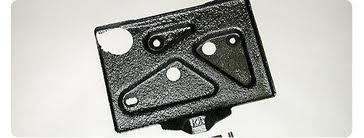
Corroded Battery Tray
New Battery Tray


Place the new battery in the tray and reinstall the hold down clamp.
If you have a top terminal battery, clean the inside of the cables with a battery brush and wire brush the battery posts. If you have a side terminal battery, clean the terminals with the wire brush.

Corroded Battery Terminal

Clean Battery Terminal

Check and make sure there is no corrosion on the battery cables. Clean them as required.
Reattach the positive battery cable first and then the negative battery cable. Tighten the tight but on side terminal batteries do not over tighten. You can pull the side post out of the battery if you over tighten them.

Give the terminals a good coating of White Lithium Grease to keep them from getting corroded.

Start the engine and you're done.
This is a quick and easy job that should take 30 to 45 minutes.


Understanding Engine Lubrication


What does the Lubricants actually do?

Your lubricants that you pored down into your engine does two things. Primarily it stops all the metal surfaces in your engine from grinding together and tearing themselves apart due to the problems of friction, but it also transfers heat away from the combustion cycle. Engine oil must also be able to hold in suspension all the nasty by-products of combustion such as silica (silicon oxide) and acids. Finally, engine oil minimises the exposure to oxygen and thus oxidation at higher temperatures. It does all of these things under tremendous heat aWhat is "SLUDGE'?

Sludge is a black gluey/slimey texturesd substance that is commonly found inside an engine. The chemical compounds in engine oils break down over time due to prolonged exposure to high temperatures and poor maintenance habits. When the oil oxidises, the additives separate from it and begin to chemically break down and solidify, leading to the baked-on oil deposits turning gelatinous, and that nasty compound is what is lovingly referred to nowadays as sludge. It's like black yoghurt. What doesn't help is that modern engines, due to packaging, have smaller sumps than in the "good old days" and so hold less oil. This means that the oil that is present in the engine can't hold as much crap (for want of a better word) and that can lead to earlier chemical breakdown.
The most common factor in sludge buildup is a combination of mineral oils, a lack of maintenance by the car owner and harsh driving conditions. Although this isn't true in all cases. A 2005 Consumer Reports article discovered that for some reason, some engines from Audi, Chrysler, Saab, Toyota, and Volkswagen appear prone to sludge almost nond pressure

How to understand the numbers/codes? For Example 15W 50?

As oils heat up, they generally get thinner. Single grade oils get too thin when hot for most modern engines which is where multigrade oil comes in. The idea is simple - use science and physics to prevent the base oil from getting as thin as it would normally do when it gets hot. There's more detail on this later in the page under both viscosity, and SAE ratings. But as a quick primer - the number before the 'W' is the 'cold' viscosity rating of the oil, and the number after the 'W' is the 'hot' viscosity rating. So a 5W40 oil is one which behaves like a 5-rated single grade oil when cold, but doesn't thin any more than a 40-rated single grade oil when hot. The lower the 'winter' number (hence the 'W'), the easier the engine will turn over when starting in cold climates.

Grades for Motor/Engine Oil

What is "SLUDGE'?

Sludge is a black gluey/slimey texturesd substance that is commonly found inside an engine. The chemical compounds in engine oils break down over time due to prolonged exposure to high temperatures and poor maintenance habits. When the oil oxidises, the additives separate from it and begin to chemically break down and solidify, leading to the baked-on oil deposits turning gelatinous, and that nasty compound is what is lovingly referred to nowadays as sludge. It's like black yoghurt. What doesn't help is that modern engines, due to packaging, have smaller sumps than in the "good old days" and so hold less oil. This means that the oil that is present in the engine can't hold as much crap (for want of a better word) and that can lead to earlier chemical breakdown.
The most common factor in sludge buildup is a combination of mineral oils, a lack of maintenance by the car owner and harsh driving conditions. 


How to get rid of "SLUDGE"?

There are no hard and fast rules for curing an engine of sludge buildup. If it's really bad, flushing the engine might be the only cure, but that could also cause even more problems. If flushing the engine results in bits of sludge getting lodged where they can do more damage, you're actually worse off.

It's interesting to note that some race technicians and mechanics have reported sludge buildup in race engines as a result of aftermarket additives being used in conjunction with the regular oil. The chemical composition of the additives isn't as neutral as some companies would lead us to believe, and combined with particular types of oil and high-stress driving, they can cause oil breakdown and sludge to appear. So, i would be very careful to pour in any aftermarket additives into my engine.The lesson from them appears to be "don't use additives".

My practices is simple...get a cheap mineral grade lubricants and changed it as often as 1000 - 1500km instead of the normal 5000k routine. Draining the oil is a quick job and you will be satisfied with the results.


Mineral Or Synthetic Lube?

Mineral oils are based on oil that comes from dear old Mother Earth which has been refined. Synthetic oils are entirely concocted by chemists wearing white lab coats in oil company laboratories. The only other type is semi-synthetic, sometimes called premium, which is a blend of the two. It is safe to mix the different types, but it's wiser to switch completely to a new type rather than mixing.


Despite their name, most synthetic derived motor oils (ie Mobil 1, Castrol Formula RS etc) are actually derived from mineral oils - they are mostly Polyalphaolifins and these come from the purest part of the mineral oil refraction process, the gas. PAO oils will mix with normal mineral oils which means Joe public can add synthetic to his mineral, or mineral to his synthetic without his car engine seizing up (although I've heard Mobil 1 is actually made by reformulating ethanol).
These bases are pretty stable, and by stable I mean 'less likely to react adversely with other compounds'. They tend not to contain reactive carbon atoms for this reason. Reactive carbon has a tendency to combine with oxygen creating an acid. (As you can imagine, in an oil this would be A Bad Thing.) They also have high viscosity indices and high temperature oxidative stability. Typically a small amount of diester synthetic (a compound containing two ester groups) is added to counteract seal swell too. These diesters act as a detergent and will attack carbon residuals. So think of synthetic oils as custom-built oils. They're designed to do the job efficiently but without any of the excess baggage that can accompany mineral based oils.


Do i really need to use Flushing Oil?

Unless there's something seriously wrong with your engine, like you've filled it with milk or shampoo, you really ought never to need a flushing oil. If you're transitioning from a mineral oil to a synthetic oil, likewise you probably don't need to flush the engine first.
If you do decide to do an oil flush, first drain your engine of all it's oil, but leave the old oil filter in place. Next fill it up with flushing oil and run it at a fast idle for about 20 minutes. Finally, drain all this off (and marvel at the crap that comes out with it), replace the oil filter, refill with a good synthetic oil and voila! Clean engine.
Of course, like most things nowadays, there's a condition attached when using flushing oils. In an old engine you really don't want to remove all the deposits. Some of these deposits help seal rings, lifters and even some of the flanges between the heads, covers, pan and the block, where the gaskets are thin. I have heard of engines with over 280,000km that worked fine, but when flushed, failed in a month because the blow-by past the scraper ring (now really clean) contaminated the oil and screwed the rod bearings.

Hope this article will benefits all of us...